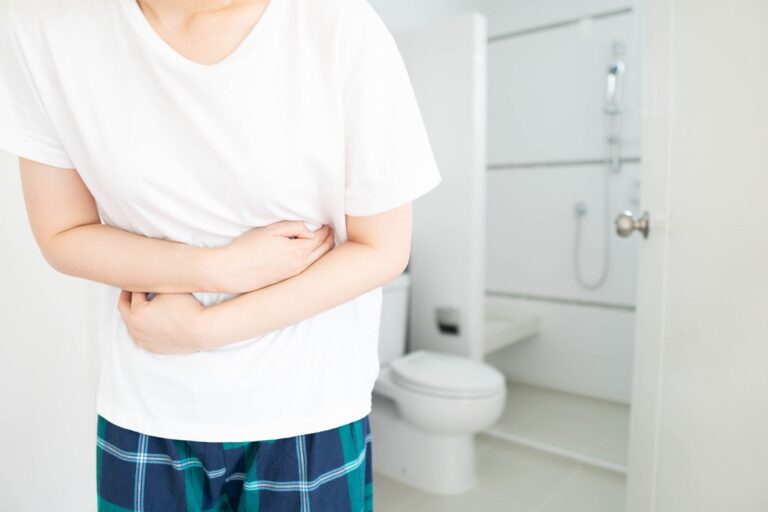
Understanding Irritable Bowel Syndrome
Irritable Bowel Syndrome (IBS) is one of the most common digestive disorders, yet it is often misunderstood. People with IBS usually have intestines that look normal on medical tests, but their digestive system does not work the way it should (1, 2, 3).
IBS can happen when the gut and the brain aren’t communicating properly. This miscommunication can affect how food moves through the intestines, how sensitive the gut feels, and what symptoms appear (2, 4).
However, it’s not just a nervous system problem. An imbalance of gut bacteria, caused by factors such as poor diet, infection, or antibiotic use, also plays an important role and can worsen symptoms like bloating, pain, and irregular bowel movements (5). Thus, IBS usually develops from a mix of factors rather than a single cause which is why each person’s experience can be so different (6, 7).

What Does IBS Feel Like?
Irritable Bowel Syndrome can be unpredictable and uncomfortable, with symptoms that vary from person to person. Abdominal pain or cramping is common and may ease or worsen after a bowel movement (8). Bloating often leaves the stomach feeling tight, swollen, or full—even after a small meal.
Bowel habits can vary. Some people have frequent loose stools or diarrhea, sometimes with a sense of urgency, while others struggle with constipation. Some experience a mix of both at different times (1). The inflammation created in the digestive tract can travel outside of it and cause systemic symptoms such as:
- Fatigue (6, 9)
- Headaches (6)
- Trouble sleeping (6)
- Anxiety or low mood (8, 9, 10)

Types of IBS
IBS does not look the same for everyone. To better describe symptom patterns and guide management, IBS is classified into subtypes based on typical stool patterns (11):
IBS-C (constipation type): Hard stools, straining, fewer bowel movements
IBS-D (diarrhea type): Loose stools, urgency, frequent bowel movements
IBS-M (mixed type): Alternating diarrhea and constipation
IBS-U (unclassified): IBS symptoms without a clear pattern
A person’s subtype can change over time, so symptoms may shift throughout the course of the condition (11).
How Common Is IBS?
IBS occurs all over the world, but rates can vary between regions. These differences may be due to how IBS is diagnosed, access to healthcare, and cultural factors. Statistically, IBS is diagnosed in 10–15% of the U.S. population (2, 4); however, the real number is thought to be higher because many cases likely go undiagnosed (2).
Lifestyle habits more common in industrialized countries (do you prefer “Western” countries?) —such as diets high in processed foods and low in fiber, combined with sedentary habits, chronic stress, and reduced exposure to natural microbes—may also play a role by affecting the gut microbiome and how the gut and brain communicate (2, 5, 10, 12).
Why Does IBS Happen?

IBS does not have just one cause. Instead, it usually develops from a mix of biological and environmental factors that alter gut function.
The Gut – Brain Interaction
One major factor in IBS is dysregulation of the gut–brain interaction, the two-way communication system where: your brain (nervous system) sends signals to your gut (digestive system), and your gut sends signals back to your brain (8). This communication helps control digestion, gut sensitivity, and even mood (1, 2).
- Nerves: The gut has its own network of nerves called the enteric nervous system, which can work independently but also talk to the brain.
- Chemical messengers: Both the brain and gut use chemicals called neurotransmitters to communicate. For example:
- Serotonin is mostly made in the gut and helps control bowel movements and gut sensitivity (2, 4).
- Norepinephrine and cortisol are stress hormones that can speed up or slow down digestion (2).
- Gut microbes: The microbes in your gut produce substances that affect digestion, mood, and how your body handles stress (2).
When this system is out of sync, signals between the gut and brain may be too strong, too weak, or misread, which can lead to: pain or cramping, bloating, changes in bowel habits, mood changes or anxiety (1, 3)
Stress
Stress and IBS influence each other in a cycle: stress can worsen IBS, and IBS symptoms can increase stress. Stress hormones and nervous system responses can affect digestion, make the gut more sensitive, alter gut bacteria, and weaken the gut lining (2, 10). These changes can make symptoms, mood, sleep, and energy worse. Managing stress through exercise, meditation, or deep breathing can help calm the gut–brain connection and improve symptoms (2, 10).
Microbiome imbalance
The intestines, especially the colon, are home to trillions of microorganisms—including bacteria, viruses, and fungi—collectively called the gut microbiome (8). These microbes help digest food, absorb and produce nutrients, support the immune system, and communicate with the brain (8). A healthy gut has a balance of beneficial bacteria, like Bifidobacteriumand Lactobacillus (8), and many other which support digestion, protect the gut lining, and produce short-chain fatty acids (SCFAs) that benefit your gut (13).
SCFAs are made when good bacteria ferment fiber. They help:
- Provide energy for cells lining the colon, keeping the gut lining strong.
- Reduce inflammation in the gut.
- Regulate how food and waste move through the intestines, which can affect constipation or diarrhea.
- Support communication between the gut and brain, which may influence mood and stress (13).
Modern diets high in ultra-processed foods (14), poor sleep, irregular meals, and chronic stress can disrupt this balance. Beneficial bacteria may decrease, while potentially harmful species, such as Escherichia coli,Clostridium difficile,Enterococcus and other, can overgrow (14). This imbalance, sometimes called dysbiosis, can lower SCFA production (15), weaken the gut lining (16), and contribute to bloating, diarrhea, constipation, and reflux (17). Over time, it may make the gut lining more “leaky,” letting substances called such as Lipopolysaccharides, which are potent endotoxins found in the outer membrane of gram-negative bacteria that trigger strong immune responses and inflammation that affect overall health (16). This can lead to:
- Autoimmune Diseases – Rheumatoid arthritis, Crohn’s disease, and multiple sclerosis (18), Hashimoto Thyroiditis, Lupus, Psoriasis and others
- Bacterial infections – H. pylori and C. difficile (16)
- Brain fog (19)
In short: dysbiosis throws off the balance of gut bacteria, and “leaky gut” lets things pass through the gut lining that shouldn’t get through. Together, they can increase inflammation and affect different parts of the body.
Gut Motility
Gut motility is how food and waste move through the intestines. In people with IBS, this process can get out of balance. Food moves too quickly, which can cause diarrhea, or too slowly, which can cause constipation. Sometimes, these patterns fluctuate, leading to a mix of symptoms.
Gut microbes play an important role in how fast or slow food moves through the gut. Hydrogen-producing bacteria (e.g., Bacteroides, Prevotella) can speed gut movement, sometimes leading to diarrhea. Methane-producing microbes (e.g., Methanobrevibacter smithii) can slow intestinal contractions, contributing to constipation (20, 21).
Other factors affecting motility:
- Nervous system signals and neurotransmitters (e.g., serotonin, cortisol) (2, 4)
- Diet (fatty, spicy, high sugar alcohol foods, and caffeine) (14)
- Medications (laxatives, opioids, antibiotics) (3, 22, 23)
- Infections, which may trigger post-infectious IBS (1, 3, 23)
- Physical activity (sedentary behavior can slow transit) (22)
Post-Infectious IBS
Some people develop IBS after a gut infection, which is called post-infectious IBS. Common triggers include bacterial infections like Salmonella, Campylobacter, Shigella, and certain strains of Escherichia coli; viral infections like norovirus or rotavirus; and parasitic infections like Giardia lamblia or Cryptosporidium (24). Even after the infection goes away, the gut can remain sensitive. These changes may affect how food moves through the intestines, increase gut sensitivity, change the balance of gut bacteria, activate immune responses, and weaken the gut lining (14, 24).
IBS Treatment
Diet Therapy
Diet is often the first step in managing IBS symptoms. One widely used approach is the low FODMAP diet, which limits certain carbohydrates—fermentable oligosaccharides, disaccharides, monosaccharides, and polyols—that can increase gas, bloating, and diarrhea (1). The diet is usually done in two phases:
- Elimination phase (4–8 weeks): High FODMAP foods are removed to reduce symptoms.
- Reintroduction phase: Foods are gradually added back to identify individual triggers and create a long-term personalized diet (1).
High FODMAP foods (common triggers):
- Garlic, onions
- Wheat and rye products
- Apples, pears, mangoes
- Milk and soft cheeses
Low FODMAP foods (generally well tolerated):
- Rice, oats, quinoa
- Eggs and firm cheeses
- Leafy greens (spinach, kale)
- Bananas, berries
- Lactose-free dairy products
Other helpful strategies include quality sleep, no snacking between meals and fasting after dinner at least 3 hours before bed and regular physical activity, which can improve gut movement and overall digestion (1, 14).
Foods and Supplements to Support Gut Bacteria
Supporting a healthy gut microbiome can help reduce IBS symptoms. Probiotic-rich foods, which contain live beneficial bacteria, include yogurt, kefir, sauerkraut, kimchi, and other fermented vegetables. Prebiotic foods, which feed healthy bacteria, include bananas, oats, garlic, and onions. However, in some cases, these foods can cause more symptoms or make current symptoms worse, such as a histamine intolerance (28). Thus, working with a healthcare professional is essential to determine when these strategies should be used.
Some people may also use probiotic or prebiotic supplements, usually introduced gradually to avoid extra gas or bloating.
Medications
Depending on symptom, healthcare providers may recommend medications to help with pain, diarrhea, or constipation (22):
- IBS-C: medications that help soften stool and/or make the intestines move more.
- Linaclotide (Linzess), Plecanatide (trulance), Lubiprostone (Amitiza), Prucalopride, Tegaserod, Laxatives
- IBS-D: medications that slow bowel movements, reduce fluid in the gut, or change gut bacteria.
- Loperamide, Rifaximin, Eluxadoline, bile acid binders (e.g., Cholestyramine, Colesevelam)
- Pain/Cramping: medications that relax gut muscles to reduce cramping.
- Antispasmodics (e.g., Hyoscyamine, Dicyclomine), peppermint oil (not technically a medication)
- Neuromodulators (gut-brain pain modulation): medications that reduce how strongly the brain and gut sense pain.
- TCAs (e.g., Amitriptyline, Nortriptyline, Desipramine), SSRIs (e.g., Citalopram, Fluoxetine, Sertraline)
- Prokinetics (motility enhancement): used when food moves too slowly through intestines (29).
- Prucalopride, Tegaserod, and occasionally Metoclopramide and Domperidone
These medications are often used alongside dietary and lifestyle changes for the best results.
While these medications can significantly improve symptoms, they primarily provide symptom control rather than addressing underlying causes of IBS and therefore are not considered curative therapies.
Treating Overlapping Conditions: SIBO and GERD
Many of the strategies used to manage IBS also help with SIBO and GERD, since these conditions often occur together and can worsen IBS symptoms (5, 20, 26).
SIBO Treatment
Reducing bacterial overgrowth can improve IBS symptoms by helping digestion run more smoothly, reducing gut irritation, and calming gut-brain signaling. Common approaches include:
- Antibiotics: The most effective and often first-line therapy. Usually prescribed for 1–2 weeks; can significantly reduce bloating, pain, and diarrhea (5).
- However, the return of SIBO after conventional antibiotic treatment is about 70%. In our clinic, we have seen patients who struggled with SIBO for up to four years and underwent multiple rounds of antibiotic treatment. After implementing the 5R protocol, these patients were able to resolve their SIBO.
- Dietary management: A low FODMAP or modified carbohydrate diet limiting fermentable sugars that feed bacteria.
- Probiotics and prebiotics: Can help restore healthy gut bacteria after antibiotics.
- However, probiotics should be selected based on an individual’s gut microbiota profile or underlying dysbiosis pattern, as non-specific use of probiotics and prebiotics may exacerbate symptoms in some patients.
GERD Treatment
Treating GERD can alleviate discomfort and improve digestion, but managing IBS at the same time is usually needed for the best results.
- Diet adjustments: Avoid caffeine, alcohol, chocolate, high-fat meals; eat smaller, more frequent meals (30).
- Lifestyle strategies: Don’t lie down right after eating, elevate the head of the bed, maintain a healthy weight (30).
- Medications: Proton pump inhibitors (PPIs) or H2 receptor blockers reduce stomach acid and are often used.
Treating IBS can lead to GERD resolution, and vise-versa (27).
Important note: PPI’s ( Omeprazole, Nexium and others ) strongly suppress stomach acid, which normally acts as protection against the overgrowth of bacteria. Long-term PPI use can create a less acidic environment making it easier for gut bacteria to grow, which increases the risk of SIBO and potentially make IBS symptoms worse. Long-term use of PPIs is also associated with micronutrient deficiencies (iron, calcium, magnesium, vitamin B12), increased anemia risks, increased fracture risk, and gut microbiome disruption (31).
A Functional Approach to IBS: The 5 R Framework

Some clinics use a structured, step-by-step approach to support gut healing. One widely used model is the “5R” framework, which targets multiple aspects of digestive health (32):
1. Remove
Identify things that may irritate the gut and take steps to reduce or avoid them. This can include:
- Dietary triggers: high-FODMAP foods, food intolerances (lactose, gluten, excess sugar alcohols).
- Infections or overgrowths: SIBO, Candida, or other pathogens.
- In our clinic we use targeted antimicrobials as needed based on stool testing
- Environmental or lifestyle stressors: chronic stress, poor sleep, or medications that irritate the gut.
Ways to do this include removing trigger foods, treating bacterial overgrowth if needed, or avoiding other triggers found through testing or symptom tracking.
2. Replace
Provide nutrients and supplements that help your body digest food properly:
- Digestive enzymes: help break down protein, fat, and carbohydrates.
- Stomach acid support supplements: for low gastric acid.
- Bile acids or supplements: help digest fats and absorb fat-soluble vitamins.
Using these nutrients can improve digestion, reduce bloating, and ease discomfort.
3. Reinoculate
Restore healthy gut bacteria to rebalance the microbiome:
- Probiotics: supplements containing Lactobacillus, Bifidobacterium, or multi-strain blends.
- Prebiotics: fiber sources such as oats, bananas, or inulin that feed beneficial bacteria.
- Fermented foods: yogurt, kefir, sauerkraut, and kimchi.
There is a strong research date showing that probiotics can be very effective in the treatment of IBS with very few side effects [21, 22, 23, 24, 25].
This step supports SCFA production, improves gut barrier function, and regulates motility.
4. Repair
Support a healthy gut lining and help the intestines function properly:
- Key nutrients: zinc, glutamine, omega-3 fatty acids, and antioxidants (vitamins A, C, E).
- Benefits: can reduce “leaky gut,” lower inflammation, and help repair tissue and support the immune system.
- GI Revive treats leaky gut by sealing the tears in the gut mucosa by repairing the gut lining
- Additional strategies: avoiding irritants such as NSAIDs, alcohol, or excessive processed foods, and focus on whole, nutrient-dense meals.
5. Rebalance
Focus on lifestyle habits that support gut health and the connection between your gut and brain:
- Stress management: mindfulness, meditation, cognitive behavioral therapy, or deep breathing exercises.
- Sleep quality: maintaining consistent sleep schedules and restorative sleep.
- Physical activity: regular exercise to support digestion and gut movement.
- Nervous system regulation: yoga, breathing exercises, or other techniques to calm stress responses.
This step can help reduce flare-ups and improve long-term symptom control by supporting overall health.
The 5R framework targets different areas of gut health—reducing irritants, supporting digestion, restoring healthy bacteria, repairing the gut lining, and improving lifestyle habits. Following these steps together can help people with IBS manage symptoms more effectively, improve gut function, and feel better overall.
Summary
Irritable Bowel Syndrome can be frustrating, unpredictable, and sometimes difficult to understand. Even though the digestive tract may look normal on medical tests, the way the gut and brain communicate, how food moves through the intestines, and how sensitive the gut becomes can all be affected. IBS usually develops from several factors working together, such as stress, changes in gut bacteria, infections, diet, and nervous system signaling, which is why symptoms and triggers can be different for everyone. The good news is that many people can improve their symptoms by taking a comprehensive approach that includes diet changes, lifestyle habits, stress management, and treatment of related conditions like SIBO or GERD when needed. With the right strategies and support, people with IBS can better manage their symptoms and improve their overall digestive health and quality of life.
REFERENCES
- Nathani RR, Sodhani S, Goosenberg E. Irritable bowel syndrome. In: StatPearls. StatPearls
Publishing; 2026. Accessed April 20, 2026.
http://www.ncbi.nlm.nih.gov/books/NBK534810/ - Gros M, Gros B, Mesonero JE, Latorre E. Neurotransmitter dysfunction in irritable bowel
syndrome: emerging approaches for management. J Clin Med. 2021;10(15):3429.
doi:10.3390/jcm10153429 - Dudzińska E, Grabrucker AM, Kwiatkowski P, Sitarz R, Sienkiewicz M. The importance of
visceral hypersensitivity in irritable bowel syndrome—plant metabolites in IBS treatment.
Pharmaceuticals. 2023;16(10):1405. doi:10.3390/ph16101405 - Vahora IS, Tsouklidis N, Kumar R, Soni R, Khan S. How serotonin level fluctuation affects
the effectiveness of treatment in irritable bowel syndrome. Cureus. 2020;12(8):e9871.
doi:10.7759/cureus.9871 - Ghoshal UC, Shukla R, Ghoshal U. Small intestinal bacterial overgrowth and irritable bowel
syndrome: a bridge between functional organic dichotomy. Gut Liver. 2017;11(2):196-208.
doi:10.5009/gnl16126 - Ohlsson B. Extraintestinal manifestations in irritable bowel syndrome: A systematic review.
Ther Adv Gastroenterol. 2022;15:17562848221114558. doi:10.1177/17562848221114558 - Liu AY, Matsuno NT, Nelson H, Johnson D, Pariser D. Directional association between
irritable bowel syndrome and dermatological disease: a large-scale retrospective study.
Gastroenterol Insights. 2025;17(1):1. doi:10.3390/gastroent17010001 - Soufan F, Ghosson A, Jaber R, Ghandour A, Uwishema O. The gut‐brain axis in irritable
bowel syndrome: implementing the role of microbiota and neuroimmune interaction in
personalized prevention—a narrative review. Health Sci Rep. 2025;8(4):e70660.
doi:10.1002/hsr2.70660 - Irritable bowel syndrome patients suffer higher rates of fibromyalgia and chronic fatigue
syndrome. University of Missouri School of Medicine. January 9, 2024. Accessed April 20, - https://medicine.missouri.edu/news/irritable-bowel-syndrome-patients-suffer-higher-
rates-fibromyalgia-and-chronic-fatigue - Staudacher HM, Black CJ, Teasdale SB, Mikocka-Walus A, Keefer L. Irritable bowel
syndrome and mental health comorbidity — approach to multidisciplinary management. Nat
Rev Gastroenterol Hepatol. 2023:1-15. doi:10.1038/s41575-023-00794-z - Allied Digestive Health. Understanding the four types of IBS. January 29, 2026. Accessed
April 20, 2026. https://allieddigestivehealth.com/understanding-the-four-types-of-ibs/ - Aslam A. Irritable bowel syndrome in Western and non-Western populations: prevalence,
psychological comorbidities, quality of life and role of nutrition. GIIDR. 2024;9(3):64-76.
doi:10.31703/giidr.2024(IX-III).08 - Xiong RG, Zhou DD, Wu SX, et al. Health benefits and side effects of short-chain fatty
acids. Foods. 2022;11(18):2863. doi:10.3390/foods11182863 - Jayasinghe M, Karunanayake V, Mohtashim A, et al. The role of diet in the management of
irritable bowel syndrome: a comprehensive review. Cureus. 2024. doi:10.7759/cureus.54244 - Ikeda T, Nishida A, Yamano M, Kimura I. Short-chain fatty acid receptors and gut
microbiota as therapeutic targets in metabolic, immune, and neurological diseases.
Pharmacol Ther. 2022;239:108273. doi:10.1016/j.pharmthera.2022.108273 - Cleveland Clinic. Dysbiosis. Accessed April 20, 2026.
https://my.clevelandclinic.org/health/diseases/dysbiosis - Napolitano M, Fasulo E, Ungaro F, et al. Gut dysbiosis in irritable bowel syndrome: a
narrative review on correlation with disease subtypes and novel therapeutic implications.
Microorganisms. 2023;11(10):2369. doi:10.3390/microorganisms11102369 - Mousa WK, Chehadeh F, Husband S. Microbial dysbiosis in the gut drives systemic
autoimmune diseases. Front Immunol. 2022;13:906258. doi:10.3389/fimmu.2022.906258 - Manos A. What causes brain fog: what you need to know. Healthpath. January 22, 2025.
Accessed April 20, 2026. https://healthpath.com/gut-health/brain-fog-what-you-need-to-
know/ - Triantafyllou K, Chang C, Pimentel M. Methanogens, methane and gastrointestinal motility.
J Neurogastroenterol Motil. 2014;20(1):31-40. doi:10.5056/jnm.2014.20.1.31 - Gill J. Different types of small intestinal bowel overgrowth (SIBO). Dublin Centre for
Functional Medicine. January 8, 2023. Accessed April 20, 2026.
https://dublincfm.com/digestive-health/sibo/different-types-of-small-intestinal-overgrowth-
sibo/ - Black CJ, Ford AC. Best management of irritable bowel syndrome. Frontline Gastroenterol.
2020;12(4):303-315. doi:10.1136/flgastro-2019-101298 - Šuran J, Pavlović N, Božić J, et al. Ibs and sibo: gut microbiota, pathophysiology, and non-
pharmacological interventions. Antibiotics. 2026;15(3):251.
doi:10.3390/antibiotics15030251 - Berumen A, Edwinson AL, Grover M. Post-infection irritable bowel syndrome.
Gastroenterol Clin North Am. 2021;50(2):445-461. doi:10.1016/j.gtc.2021.02.007 - Lacy BE, Patel NK. Rome criteria and a diagnostic approach to irritable bowel syndrome. J
Clin Med. 2017;6(11):99. doi:10.3390/jcm6110099 - Shah A, Talley NJ, Jones M, et al. Small intestinal bacterial overgrowth in irritable bowel
syndrome: a systematic review and meta-analysis of case-control studies. Am J
Gastroenterol. 2020;115(2):190-201. doi:10.14309/ajg.0000000000000504 - De Bortoli N. Gastroesophageal reflux disease, functional dyspepsia and irritable bowel
syndrome: common overlapping gastrointestinal disorders. Ann Gastroenterol. 2018.
doi:10.20524/aog.2018.0314 - Healthline. 5 possible side effects of probiotics. December 17, 2017. Accessed April 20,
- https://www.healthline.com/nutrition/probiotics-side-effects
- Frazer K, Wells J. What is the role of prokinetic agents in patients with constipation?
Evidence-Based Practice. 2016;19(4):7. doi:10.1097/01.EBP.0000541191.93721.ca - Memorial Sloan Kettering Cancer Center. Gastroesophageal reflux disease (GERD).
Accessed April 20, 2026. https://www.mskcc.org/cancer-care/patient-
education/gastroesophageal-reflux-disease-gerd - Ito T, Jensen RT. Association of long-term proton pump inhibitor therapy with bone fractures
and effects on absorption of calcium, vitamin B12, iron, and magnesium. Curr Gastroenterol
Rep. 2010;12(6):448-457. doi:10.1007/s11894-010-0141-0 - Institute for Functional Medicine. The 5R Framework for Gut Restoration. Institute
for Functional Medicine; 2022.